The two slowest months of the cannabis retail calendar are also the most strategic. Here's how high-performing dispensaries use May and June to set up the second half of the year.
TL;DR
May and June are structurally the slowest months in cannabis retail, sitting between the 4/20 spike and the 7/10 + summer demand surge.
Top-performing dispensaries don't fight the slowdown - they use the breathing room to fix the loyalty, data, and operational issues they didn't have time to address in Q1.
The seven highest-leverage Q2 moves: clean your customer data, audit your loyalty program, prep your 7/10 campaign, run small-bet experiments, train your team, fix your enrollment flow, and re-engage lapsed members.
Dispensaries that treat May and June as planning months consistently outperform those that wait for the summer rush to start strategizing.
Why May and June are structurally slow
If you've operated a dispensary for more than a year, you already know the pattern: 4/20 produces a massive April spike, then traffic falls off a cliff in May. June stays soft. Then 7/10 kicks off a steady summer ramp that builds through Croptober, peaks at Green Wednesday, and rolls into the holiday season.
This isn't a coincidence and it isn't a problem you can solve with discounting. It's the rhythm of the category.
Three structural factors drive the Q2 dip:
Customers who stocked up at 4/20 don't need more product yet. The biggest single shopping day of the year produces a built-in demand pause for two to four weeks afterward.
The weather shifts spending priorities. As warm weather returns in much of the country, consumer spending shifts toward outdoor categories, travel, and experiences. Cannabis competes with a larger discretionary basket in May and June than it does in January or November.
There's no major cannabis holiday between 4/20 and 7/10. Mother's Day, Father's Day, and Memorial Day are real opportunities, but none of them drive cannabis demand the way the dedicated cannabis holidays do.
The instinct in slow months is to either panic-discount or just wait it out. Top dispensaries do neither.
What top dispensaries actually do in May and June
The dispensaries that consistently outperform their market aren't trying to manufacture demand during a structural lull. They're using the calmer floor traffic to do the strategic work they couldn't do during Q1.
Here's the playbook, in priority order.
1. Clean your customer data
Q1 is when most dispensaries are running flat-out to support holiday momentum, planning 4/20, and dealing with whatever broke over the new year. Nobody has time to audit their CRM, dedupe customer profiles, fix bad phone numbers, or reconcile loyalty data across systems.
May is the month to fix it.
The reason it matters: every marketing dollar you spend in Q3 and Q4 - Croptober, Green Wednesday, Black Friday, holiday - runs through the customer database you built during the rest of the year. If 25% of your phone numbers are wrong, 25% of your Green Wednesday SMS budget is wasted before you send the first message. If your loyalty data doesn't match your POS data, your "best customer" segment isn't actually your best customers.
A focused two-week data cleanup in May pays compounding dividends every month afterward.
2. Audit your loyalty program against your own historical performance
You can't compare your dispensary against industry benchmarks because no neutral source publishes them. What you can do is compare your dispensary against your own past performance.
Pull the seven metrics that actually matter:
Loyalty opt-in rate (new signups divided by unique customers)
Member basket size vs. non-member basket size
Member visit frequency vs. non-member frequency
30-day, 90-day, and annual retention rates
Push notification or SMS engagement rates
Revenue share from loyalty members
Customer acquisition cost vs. lifetime value, by segment
Compare each metric to the same metric from May/June of last year. Where you've improved, identify why. Where you've gotten worse, identify why. Pick the two metrics with the largest negative drift and focus your fixes there.
This is the kind of work that quietly determines whether your Q4 is great or just okay.
3. Build your 7/10 campaign now, not in late June
Most dispensaries start planning their 7/10 (Dab Day) campaign two or three weeks out. By that point, the inventory decisions are locked, the partner brand collaborations are too late, and the campaign ends up looking like a rushed version of 4/20.
The dispensaries that win 7/10 start building it in mid-May. They lock in concentrate brand partners, plan their loyalty push, design their wallet pass updates, and have everything ready to deploy by late June.
7/10 is the second-biggest cannabis holiday of the year, and concentrate-focused customers spend significantly more per visit than the average customer. Coming into the holiday prepared is a multi-thousand-dollar decision.
4. Run small-bet experiments
Q1 is too high-stakes to experiment. Q3 and Q4 are too high-volume to experiment. May and June are the only months where you can test something new without endangering peak-season performance.
Use the window to run controlled tests on things you've been curious about:
A new push notification time-of-day
A different opt-in incentive at the register
A new wallet pass design
A different loyalty tier structure
A new bundle or promotion mechanic
A different cadence of customer outreach
Each test costs you almost nothing during a slow month. Each insight compounds into Q3 and Q4. Top dispensaries treat May and June as their R&D budget.
5. Re-engage lapsed loyalty members
Every loyalty program accumulates a "long tail" of members who joined, made a few purchases, and quietly stopped coming in. Most dispensaries never do anything about it. The reactivation rate from a single well-timed win-back campaign typically beats the conversion rate of any acquisition campaign you'd run in the same month.
A simple May/June win-back works like this:
Pull every loyalty member who hasn't visited in 60-plus days
Segment them by their historical purchase pattern (flower buyers vs. concentrate buyers vs. edibles buyers)
Send a wallet push or SMS with a category-specific offer that matters to them, not a generic "we miss you" message
Track which segment reactivates and at what rate
The customers you bring back in May visit again in July, August, September - and they shop holiday. The win-back math compounds.
6. Fix your enrollment flow
If your loyalty opt-in rate is below your own historical average, the single highest-leverage thing to fix is the enrollment flow at checkout.
Walk through it yourself. Time it. Try to enroll on the busiest day of the week, with the longest line behind you. Try it on both Apple Wallet and Google Wallet. Try it with a budtender who's new to the program. Where does it break? Where does it slow down? Where does the customer hesitate?
A 10-second enrollment flow drives an enormously different opt-in rate than a 90-second enrollment flow. The friction matters more than the reward.
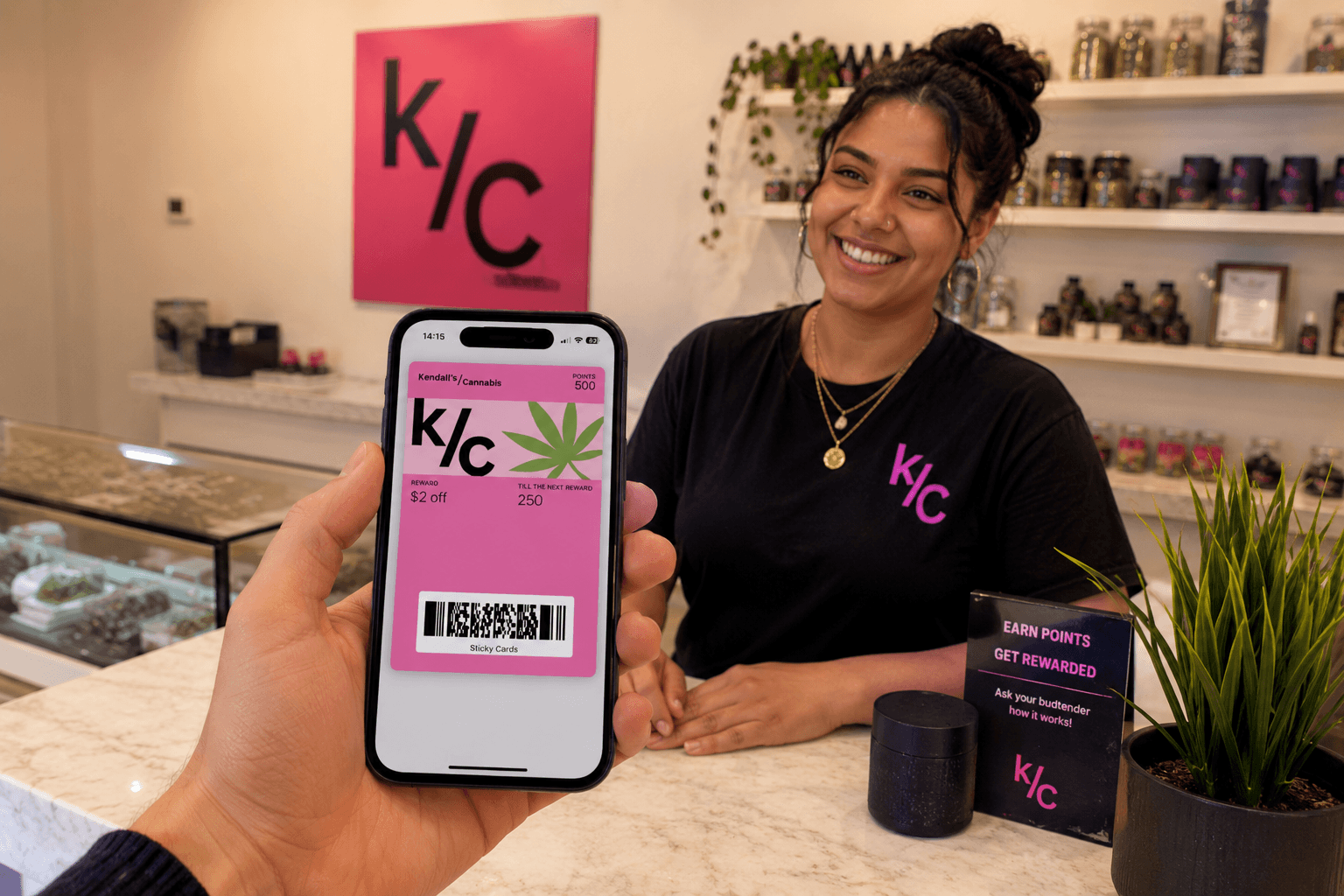
If you're running a wallet pass loyalty program, the enrollment should be a QR scan and a tap. If it's longer than that, fix it before the volume comes back.
7. Train your team on the second half of the year
Budtender turnover spikes in early summer in many states. The team you'll have at Croptober and Green Wednesday isn't necessarily the team you have now. May and June are when you should be training the people who will execute your busiest months.
The training that pays off most:
How to talk to customers about loyalty enrollment without making it feel like a pitch
How to handle wallet pass setup on the customer's phone, on both iOS and Android
How to upsell loyalty members into higher tiers
How to recognize and serve VIP members differently
How to use push notifications effectively without sending too many
Frontline execution is what turns loyalty strategy into loyalty revenue. The training doesn't happen during peak season. It happens now.
What not to do in May and June
Three patterns predictably hurt dispensaries during the Q2 slowdown.
Don't panic-discount. Aggressive sitewide discounting in May trains customers to wait for sales. The dispensaries that hold pricing discipline in Q2 enter Q3 with healthier margins and a customer base that still respects full price.
Don't go quiet on marketing. Cutting your marketing budget in slow months feels prudent. It usually isn't. The relative cost of being in front of customers is lower in May (less competition for attention) than in October. Continuing to engage in Q2 protects share of mind for Q3.
Don't wait to think about Q4. Every operator who looks back at a disappointing fourth quarter says the same thing: "I should have started planning in the summer." May is summer for planning purposes. June is too.
A simple May-June planning template
If you only do one thing with this post, do this. Block four 90-minute working sessions across May and June and use them for:
Session 1: Data and metrics audit. Pull last year's numbers, compare to this year's, identify the two biggest gaps.
Session 2: Loyalty program review. Audit your enrollment flow, your reward structure, your engagement rates, and your VIP tier.
Session 3: 7/10 and Q3 campaign build. Lock concept, partners, inventory, creative, and timing.
Session 4: Win-back and Q4 prep. Design your lapsed-member reactivation and your Croptober/Green Wednesday/Black Friday strategy.
That's six hours of strategic work. The dispensaries that consistently outperform are the ones that do this kind of work during the structural lull instead of during the rush.
Frequently Asked Questions
Why is May the slowest month for cannabis dispensaries?
May is typically the slowest month for cannabis dispensaries because customers stocked up at 4/20, warm weather shifts consumer spending toward outdoor activities and travel, and there's no major cannabis holiday between 4/20 in April and 7/10 in July. The slowdown is structural, not an operator-specific problem.
What should a dispensary do during the Q2 slowdown?
During the Q2 slowdown, top dispensaries clean their customer data, audit their loyalty program, build their 7/10 campaign, run small-bet experiments, train their team for the second half of the year, fix their enrollment flow, and re-engage lapsed loyalty members. The slower floor traffic is the only window in the year to do this strategic work without endangering peak-season performance.
When should a dispensary start planning its 7/10 campaign?
Top-performing dispensaries start planning their 7/10 (Dab Day) campaign in mid-May, roughly six to eight weeks ahead. Starting earlier allows operators to lock in concentrate brand partnerships, plan loyalty pushes, design wallet pass updates, and align inventory before the demand window opens.
Is it worth running marketing campaigns during the May-June slowdown?
Yes. Cutting marketing during the slowdown is usually a mistake. The relative cost of customer attention is lower in May and June than in October or November, which means dollars spent staying engaged during the slowdown protect share of mind for the second half of the year.
What's the highest-leverage loyalty fix during the slow season?
The single highest-leverage fix during the slow season is the customer enrollment flow at checkout. A 10-second wallet pass enrollment drives dramatically higher opt-in rates than a 90-second app-based enrollment. May and June are the right months to audit and improve the flow before peak-season volume returns.
How should dispensaries use a win-back campaign in Q2?
A Q2 win-back campaign should target loyalty members who haven't visited in 60-plus days, segmented by their historical purchase pattern, with offers tailored to what they actually buy. Generic "we miss you" messages underperform category-specific offers, and reactivation rates in Q2 typically beat the cost of acquiring new customers in the same window.