A practical guide to how cannabis advertising and marketing regulations differ across U.S. states - what's universal, what varies, and where to find the authoritative rules for your market.
Last updated: [20 May, 2026]. Always verify current rules with your state regulator and a licensed attorney before launching a campaign.
TL;DR
There is no federal framework for cannabis marketing. Because cannabis remains federally illegal, every state writes its own advertising and marketing rules, and they vary enormously.
A handful of rules are nearly universal: audience must be verified as 21+ (or qualifying patients), no marketing to minors, no health claims, no false or misleading statements, and mandatory warning language.
The biggest variation is in what channels you can use - some states restrict or ban billboards, certain digital ads, and unsolicited SMS, while others are more permissive.
Loyalty programs and promotions are legal in most states but regulated, with rules on discounting, "free" product, and how rewards can be communicated.
Owned channels like wallet pass push notifications are structurally advantaged because they reach customers who have explicitly opted in, sidestepping many of the restrictions that apply to broadcast advertising.
Why cannabis marketing rules are so fragmented
In most retail industries, marketing is governed by a relatively consistent set of federal rules - the FTC handles advertising standards, the FCC and TCPA handle messaging, and the rules are broadly the same whether you're in Florida or Oregon.
Cannabis is different. Because cannabis remains a Schedule I substance under federal law, according to the U.S. Drug Enforcement Administration, there is no federal regulatory framework governing how it can be marketed. That vacuum has been filled by individual states, each of which has built its own rules through its cannabis control agency.
The result is a patchwork. A billboard that's perfectly legal in one state can trigger a license violation in the state next door. An SMS campaign that's compliant in one market can violate consent rules in another. Operators in multiple states have to manage a different rulebook for every market they operate in.
This post covers what's broadly consistent across states, where the major variation lies, and - most importantly - where to find the authoritative, current rules for your specific market.
The rules that are nearly universal
While the details vary, a core set of principles appears in virtually every state's cannabis marketing regulations. If you follow these, you're compliant with the spirit of cannabis marketing law almost everywhere. The specifics still need state-level verification, but these principles are the floor.
Age verification. Nearly every state requires that cannabis marketing be directed only to adults 21+ (recreational) or qualifying patients (medical). Many states apply a standard requiring that at least 71.6% of the audience be reasonably expected to be of legal age - a figure drawn from federal alcohol advertising guidance that many state cannabis regulators have adopted.
No marketing to minors. Universal. This includes prohibitions on cartoon characters, imagery or language designed to appeal to children, and placement near schools, playgrounds, or youth-oriented venues.
No false or misleading statements. You cannot make claims you can't substantiate.
No unproven health or therapeutic claims. Stating or implying that a cannabis product cures, treats, or prevents any disease or condition is prohibited in essentially every state without substantiation, and is an area regulators watch closely.
Mandatory warnings and disclaimers. Most states require specific warning language on advertising - about health risks, keeping products away from children, not operating vehicles, and similar.
Consent for direct messaging. SMS and email marketing are governed by federal law (TCPA and CAN-SPAM) on top of state rules, requiring explicit opt-in consent regardless of which state you operate in.
Where the rules vary most
This is where operators get into trouble. The following dimensions differ significantly from state to state, and getting them wrong is where license violations happen.
Marketing dimension | How it varies across states |
|---|---|
Billboards & outdoor | Some states permit them with restrictions; others ban them outright or prohibit them near highways and schools |
Digital & social ads | Varies widely; many states require age-gating and audience composition thresholds; platform policies often stricter than state law |
SMS / text marketing | All require opt-in consent (federal TCPA), but states layer additional rules on frequency, content, and disclosures |
Loyalty & discounts | Most permit loyalty programs, but rules differ on "free" product, points-to-discount mechanics, and how rewards are advertised |
Branded merchandise | Some states restrict promotional giveaways and branded items, especially anything that could appeal to minors |
Influencer / affiliate | Disclosure rules and outright restrictions vary; some states heavily restrict third-party promotion |
Event & sponsorship | Rules on sponsoring events, sampling, and on-site promotion vary significantly |
This table shows the categories of variation, not state-specific rules. Always confirm specifics with your state regulator.
State-by-state quick reference
The table below is a directional starting point, not legal advice, and not a substitute for reading your state's actual regulations. For every state, the authoritative source is the state's cannabis control agency. We've listed the governing body for the largest markets so you can go straight to the primary source.
Important: Cannabis regulations change frequently. The "Governing Body" column tells you where to find current rules. Always verify before launching any campaign.
State | Market Type | Governing Regulatory Body (verify current rules here) |
|---|---|---|
California | Adult-use + Medical | Department of Cannabis Control (DCC) |
Colorado | Adult-use + Medical | Marijuana Enforcement Division (MED), Dept. of Revenue |
Washington | Adult-use + Medical | Washington State Liquor and Cannabis Board (LCB) |
Oregon | Adult-use + Medical | Oregon Liquor and Cannabis Commission (OLCC) |
Michigan | Adult-use + Medical | Cannabis Regulatory Agency (CRA) |
Massachusetts | Adult-use + Medical | Cannabis Control Commission (CCC) |
Illinois | Adult-use + Medical | Illinois Dept. of Financial and Professional Regulation (IDFPR) |
New York | Adult-use + Medical | Office of Cannabis Management (OCM) |
New Jersey | Adult-use + Medical | Cannabis Regulatory Commission (NJ-CRC) |
Arizona | Adult-use + Medical | Arizona Department of Health Services (ADHS) |
Nevada | Adult-use + Medical | Cannabis Compliance Board (CCB) |
Florida | Medical only | Office of Medical Marijuana Use (OMMU), Dept. of Health |
Ohio | Adult-use + Medical | Division of Cannabis Control |
Missouri | Adult-use + Medical | Division of Cannabis Regulation |
Maryland | Adult-use + Medical | Maryland Cannabis Administration (MCA) |
Pennsylvania | Medical only | Pennsylvania Dept. of Health, Medical Marijuana Program |
Source for governing bodies: each state's official cannabis regulatory agency. Market type reflects general status; verify current legal status as markets continue to change.
The recurring theme: owned channels beat broadcast channels
When you look across all 24+ legal markets, one strategic pattern emerges clearly. The marketing channels that face the most restriction are broadcast channels - billboards, digital ads, social media, anything that reaches a general audience. The channels that face the least restriction are owned, opt-in channels that reach customers who have explicitly consented to hear from you.
This is why so many operators in restrictive states - New York and Massachusetts being prime examples - have shifted budget toward owned channels. When you can't rely on billboards or paid social, the customers who've opted into your loyalty program become your most reliable and most compliant marketing audience.
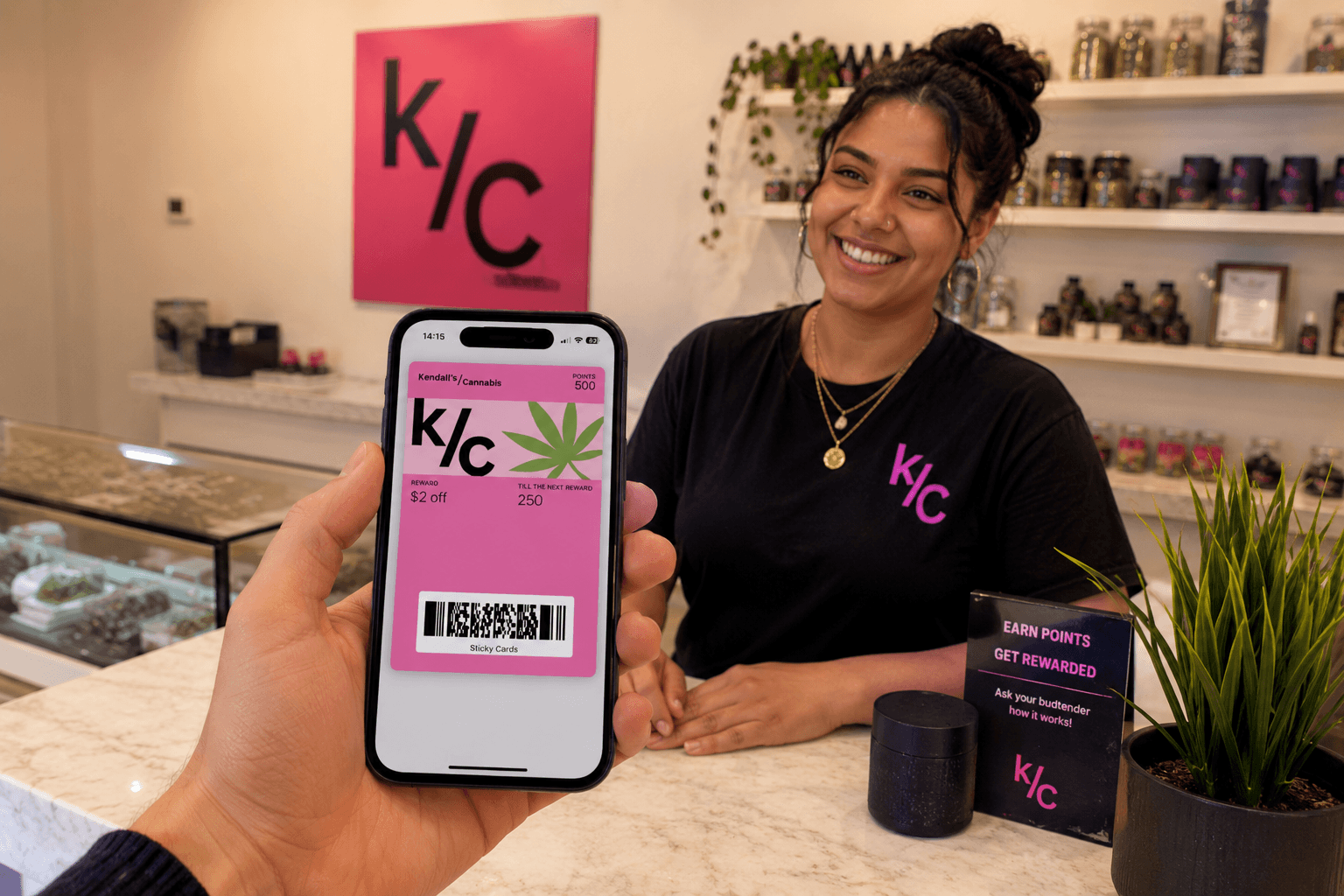
Wallet pass loyalty fits this pattern especially well. A customer who scans a QR code to add a Sticky Cards wallet pass to their phone has explicitly opted in, which means push notifications sent to that customer reach a consenting, age-verified audience - exactly the audience cannabis marketing rules are built around. It doesn't eliminate the need to follow your state's specific content and disclosure rules, but it sidesteps the broadcast-audience restrictions that make other channels so difficult.
For a deeper look at how compliant messaging works in practice, Sticky Cards' cannabis loyalty resources walk through opt-in, consent, and messaging mechanics.
A practical compliance checklist
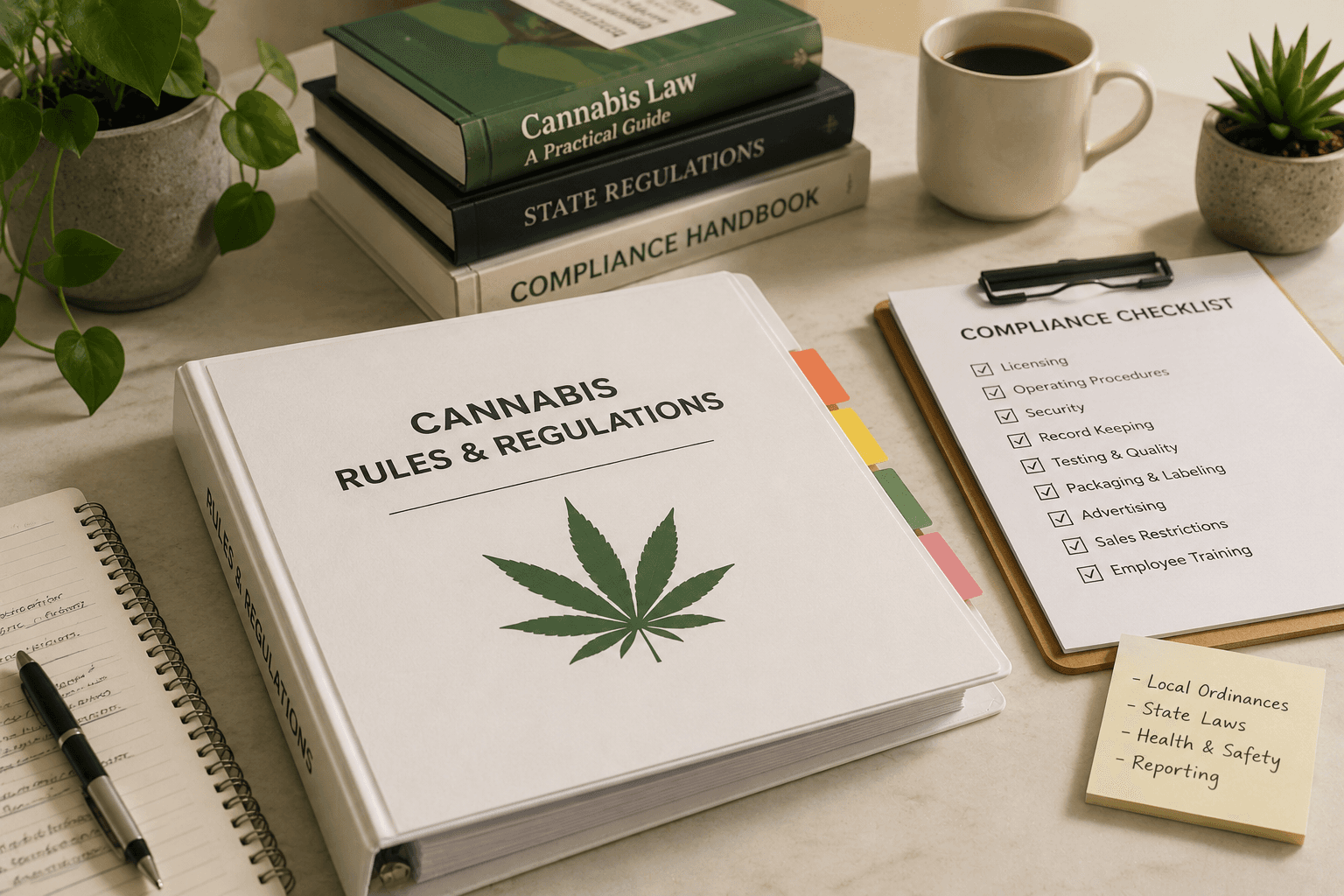
Before launching any cannabis marketing campaign, run through this checklist. It won't replace your state's specific rules or your attorney's review, but it catches the most common violations.
Have you read your state regulator's current advertising rules? Not a summary - the actual regulations. They change.
Is your audience verified as 21+ or qualifying patients? For digital and messaging, can you document the age composition?
Have you removed all health and therapeutic claims unless you can substantiate them and your state permits them?
Is your required warning language included on the specific channels your state mandates it?
Did every SMS and email recipient explicitly opt in? Can you prove it?
Does your campaign avoid any content that could appeal to minors?
Are your loyalty mechanics compliant with your state's rules on discounts and "free" product?
Has someone qualified reviewed it - ideally a compliance officer or cannabis attorney?
Frequently Asked Questions
Are cannabis marketing rules the same in every state?
No. Because cannabis is federally illegal, there is no federal framework for cannabis marketing, and every legal state writes its own rules through its cannabis control agency. While certain principles are nearly universal - age verification, no marketing to minors, no unproven health claims, mandatory warnings - the specific rules on billboards, digital ads, SMS, loyalty programs, and merchandise vary significantly by state.
What cannabis marketing rules are consistent across all states?
The most consistent cannabis marketing rules across states are: marketing must target adults 21+ or qualifying patients, no marketing may appeal to or target minors, no false or misleading statements are allowed, unproven health and therapeutic claims are prohibited, mandatory warning language is required, and SMS/email marketing requires explicit opt-in consent under federal TCPA and CAN-SPAM law.
Can dispensaries run loyalty programs in every state?
Most legal cannabis states permit loyalty programs, but they regulate the details — including rules on discounting, offering "free" product, points-to-discount mechanics, and how rewards can be advertised. Operators should confirm their specific state's rules on loyalty and promotions before launching, since these rules vary and change.
Why is SMS marketing harder for cannabis than other industries?
Cannabis SMS marketing must comply with federal TCPA consent rules, state-level cannabis advertising regulations, and wireless carrier policies under the 10DLC framework — which classifies cannabis as a high-scrutiny content category subject to carrier filtering. This combination makes SMS more restricted and less reliable for cannabis than for most other industries.
Where can I find the official cannabis marketing rules for my state?
The authoritative source for cannabis marketing rules in any state is that state's cannabis control agency — for example, the Department of Cannabis Control in California, the Office of Cannabis Management in New York, or the Cannabis Regulatory Agency in Michigan. Always consult the regulator's current published regulations and a licensed cannabis attorney before launching campaigns.
Are wallet pass push notifications subject to the same rules as billboards?
Wallet pass push notifications reach customers who have explicitly opted in and can be age-verified at enrollment, which means they avoid many of the broadcast-audience restrictions that apply to billboards and general digital advertising. However, the content of those notifications must still comply with each state's rules on claims, warnings, and disclosures.
Do cannabis marketing rules change often?
Yes. Cannabis regulations, including marketing rules, change frequently as states refine their programs, new markets launch, and existing markets mature. New York, for example, updated its rules on retailer promotions and loyalty programs as its adult-use market developed. Operators should treat compliance as an ongoing process, not a one-time setup.
Methodology and sources
This reference synthesizes publicly available information from:
Federal sources: U.S. Drug Enforcement Administration (cannabis scheduling), Federal Trade Commission (advertising standards), Federal Communications Commission and the TCPA (messaging consent)
State cannabis regulatory agencies: the official cannabis control body for each legal state, listed in the table above, which publishes the authoritative and current marketing regulations for its market
Wireless industry guidance: CTIA Messaging Principles and Best Practices and The Campaign Registry (10DLC framework)
This post is a general reference and does not constitute legal advice. Cannabis marketing regulations are state-specific, change frequently, and carry real consequences for non-compliance. Always consult your state regulator's current published rules and a licensed cannabis attorney before launching any marketing campaign.