The "98% SMS open rate" stat you've heard a hundred times isn't real. Here's why, and the five metrics that actually tell you whether your dispensary marketing is working.
Reading time: ~5 minutes.
TL;DR
SMS has no native "open rate." It's technically impossible to measure. Unlike email, the SMS protocol has no read-receipt mechanism for marketing messages, so any "open rate" number you've been shown is an estimate or an industry assumption, not a measurement.
The famous "98% of texts get opened" stat is marketing lore, not data. It gets repeated endlessly because it sounds great and nobody can disprove it, but nobody can prove it either.
"Sent" doesn't mean "delivered," and "delivered" doesn't mean "seen." Carrier filtering quietly drops a meaningful share of cannabis SMS before it ever reaches a phone.
Track these five things instead: delivery rate, click-through rate, redemption/conversion rate, revenue per send, and opt-out rate.
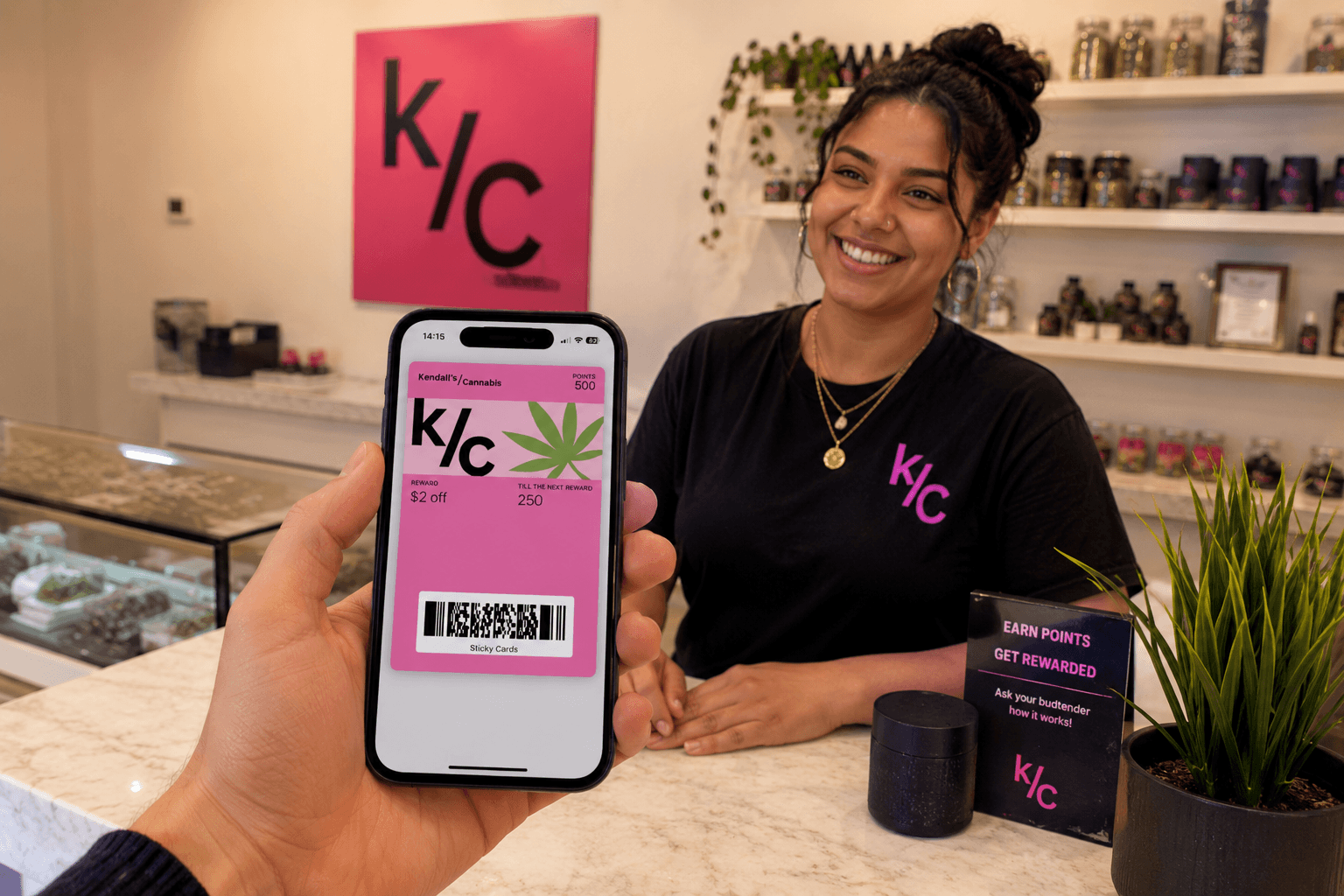
Channels with real, built-in tracking - like wallet pass push notifications - let you measure what actually happened instead of guessing from a vanity stat.
The stat everyone repeats and nobody verifies
If you've sat through a single SMS marketing demo, you've heard it: "Text messages have a 98% open rate." Sometimes it's 97%. Sometimes it's "98% of texts are read within three minutes." The number varies, but the pitch is always the same - SMS is the highest-engagement channel there is, so you should be sending more of it.
There's just one problem. That number isn't measured. It can't be.
Here's the technical reality: SMS, as a protocol, has no read-receipt mechanism for marketing messages. When you send a marketing text, there is no signal sent back to you when (or whether) the recipient opens it. Email has open tracking through a tiny invisible pixel that loads when the message is viewed. SMS has nothing equivalent. There is no pixel, no receipt, no "seen" indicator that flows back to the sender.
So where does "98%" come from? It's an assumption - the idea that because people glance at most texts, they must "open" nearly all of them. It may even be directionally true. But it is not a metric anyone is actually capturing from your campaigns. When a platform shows you an "SMS open rate," they are showing you an industry assumption dressed up as your data.
That matters, because you can't optimize what you can't measure. And a number you can't measure is worse than no number at all, because it gives you false confidence.
"Sent" is not "delivered" is not "seen"
The open-rate myth hides a more important problem: a lot of cannabis SMS never arrives at all.
There's a chain of events between hitting "send" and a customer reading your message, and things fall away at every step:
Sent: your platform dispatched the message. This is the only number fully in your control.
Delivered: the message actually reached the recipient's device. For cannabis, this is where a meaningful share disappears.
Seen: the customer actually looked at it. Unmeasurable in SMS.
Acted on: the customer clicked, visited, or bought. This is the only step that matters to your revenue.
The gap between step 1 and step 2 is where cannabis operators get hurt. Under the federal 10DLC framework and the wireless carriers' content policies, cannabis is treated as a high-scrutiny category. Carriers - Verizon, AT&T, T-Mobile, and others - filter, throttle, or silently drop messages they associate with regulated content. Even fully registered, fully compliant cannabis operators routinely lose a portion of every send to filtering they never see and can't control.
So when a platform reports "10,000 sent, 98% open rate," what that can actually mean is: 10,000 dispatched, an unknown number filtered out by carriers, an unknown number delivered, and a completely assumed "open" figure applied to the whole batch. The headline looks fantastic. The reality underneath is a black box.
The five metrics that actually tell the truth
If open rate is a vanity number, what should you track instead? These five metrics are all measurable, all meaningful, and all tied to outcomes you actually care about.
Metric | What it measures | Why it matters |
|---|---|---|
Delivery rate | % of sent messages confirmed delivered to the device | The honest top of the funnel - exposes carrier filtering losses |
Click-through rate (CTR) | % of recipients who clicked a trackable link | The first real engagement signal you can actually capture |
Redemption / conversion rate | % who used the offer or completed the desired action | Ties the message directly to in-store or online behavior |
Revenue per send | Total revenue generated ÷ messages sent | The single most important number - what each message is worth |
Opt-out rate | % who unsubscribed after a message | Early warning that you're over-sending or off-target |
Notice what these have in common: every one of them is based on something that actually happened - a delivery confirmation, a click on a tracked link, a redeemed offer, a completed sale, an unsubscribe. None of them require you to assume anything.
Revenue per send is the metric to anchor on. It cuts through everything else. A campaign with a glamorous "98% open rate" that drives $0.02 of revenue per message is worse than a campaign with no open rate at all that drives $0.40 per message. Revenue per send doesn't care about vanity - it tells you what each message is genuinely worth to your business.
Why this is especially important for cannabis
In most industries, the open-rate myth is a harmless oversimplification. In cannabis, it's actively misleading, for two reasons.
The filtering problem is real and invisible. Because carriers quietly drop cannabis messages, your true delivery rate may be far below what you assume, and a fake open rate papers right over that gap. You think your message reached nearly everyone. It may have reached far fewer. Tracking delivery rate exposes the truth.
Cannabis marketing channels are limited. You can't run unrestricted paid ads, so every owned channel matters more. When your channels are precious, you cannot afford to optimize against a number that isn't real. You need to know which messages actually drive visits and revenue, so you can do more of what works and stop wasting sends.
This is also why so many dispensaries are shifting toward channels with real, built-in measurement. Push notifications sent through Apple Wallet and Google Wallet carry actual delivery and engagement tracking, and because they don't route through carrier SMS networks, they aren't subject to the same silent filtering. You can see what was delivered, what was tapped, and what drove a visit - instead of guessing from an assumed open rate.
How to fix your reporting this week
You don't need to overhaul your whole stack to stop fooling yourself. Three steps:
1. Stop reporting open rate. Start reporting delivery rate. Ask your platform for confirmed delivery numbers, not assumed opens. If they can't give you delivery confirmation, that itself is telling.
2. Put a trackable link in every campaign. A trackable link is the only way to capture real engagement from a message. If you're sending campaigns without one, you're flying blind regardless of channel.
3. Tie campaigns to redemptions and revenue. Connect your marketing to your POS so you can see which campaigns actually drove sales. Revenue per send is the number that should anchor every campaign review. For more on connecting marketing to real customer value, see our guide on repeat-visit math - the framework for measuring what a returning customer is actually worth.
Once you're measuring real outcomes instead of assumed opens, two things happen: your reporting gets honest, and your campaigns get better - because for the first time, you're optimizing against reality.
Frequently Asked Questions
Does SMS have an open rate?
Not a real, measurable one. The SMS protocol has no read-receipt mechanism for marketing messages, which means there is no technical way to know whether or when a recipient opened a text. Any "SMS open rate" shown by a marketing platform is an industry assumption or estimate, not a measurement captured from your actual campaign.
Is the 98% SMS open rate true?
The "98% open rate" figure is industry lore rather than measured data. Because SMS cannot technically track opens, the number is an assumption that gets repeated because it's appealing and unprovable. It may be directionally plausible, but it is not a metric anyone is actually capturing from your messages, so it should not be used to judge campaign performance.
What should I track instead of SMS open rate?
Track five measurable metrics instead: delivery rate (confirmed messages that reached the device), click-through rate (clicks on a trackable link), redemption or conversion rate (offers used or actions completed), revenue per send (total revenue divided by messages sent), and opt-out rate. Revenue per send is the most important because it shows what each message is actually worth.
Why don't cannabis SMS messages always get delivered?
Cannabis is classified as a high-scrutiny content category under the 10DLC framework and wireless carrier policies. As a result, carriers filter, throttle, or silently drop a portion of cannabis-related text messages - even from fully registered, compliant senders. This means a campaign's "sent" count can be significantly higher than the number of messages actually delivered.
What's the difference between sent, delivered, and seen?
"Sent" means your platform dispatched the message. "Delivered" means it reached the recipient's device, and for cannabis, carrier filtering can reduce this well below the sent number. "Seen" means the customer actually viewed it, which SMS cannot measure. Only "delivered" and the actions after it (clicks, redemptions, revenue) are trackable, which is why those are the metrics worth reporting.
Are wallet pass push notifications more measurable than SMS?
Yes. Push notifications sent through Apple Wallet and Google Wallet carry real delivery and engagement tracking, and because they don't route through carrier SMS networks, they avoid the silent carrier filtering that affects cannabis text messages. This gives operators measurable data on what was delivered and acted on, rather than an assumed open rate.